Firing
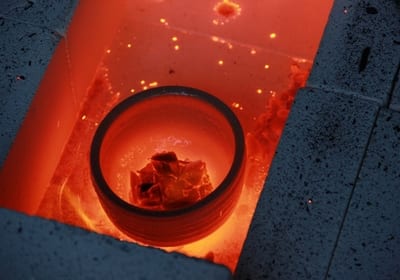
Seventy-two hours in the anagama
What happens when you feed a kiln through the night — and what the ash decides on its own.
Reflections on clay, fire, and the slow rhythms of studio work.
Most people who pick up a finished bowl don't think about the clay it came from. They think about the glaze, the shape, the weight in the hand. But the clay body is the first decision — and it determines almost everything that follows.
I use a Hunter Valley stoneware blended with a small percentage of local porcelain. The stoneware gives the body its warmth — a dense, iron-rich character that fires to a grey-brown with depth. The porcelain opens the texture and improves how the clay responds at the wheel. Too much porcelain and the body becomes slippery, unforgiving. Too little and it drags.
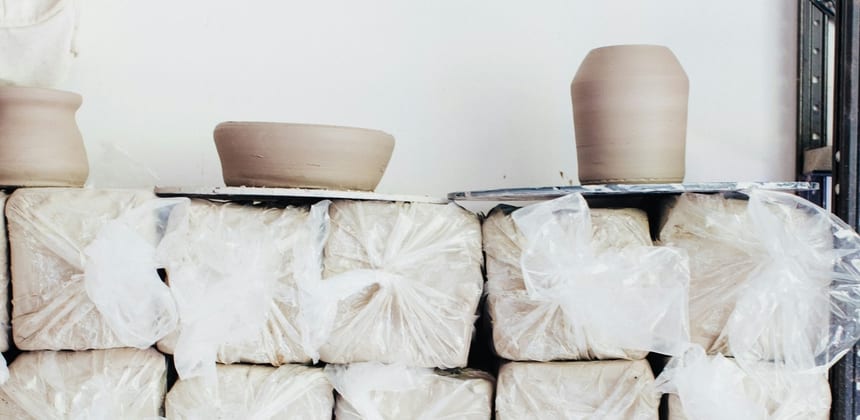
Hunter Valley stoneware before wedging — the first act of listening.
Finding the right blend took two years of testing. I kept notes — firing temperature, shrinkage rate, how the surface accepted glaze — but the real test was always the wheel. Does it centre easily? Does it hold its shape when the walls get thin? Does it feel like it wants to be a bowl?
The answer to that last question sounds unscientific. It isn't. Clay has a memory. It remembers how it was worked, how quickly it dried, what temperature it reached. A body that resists you at the wheel will resist you in the kiln. A body that opens easily tends to fire with the same generosity.
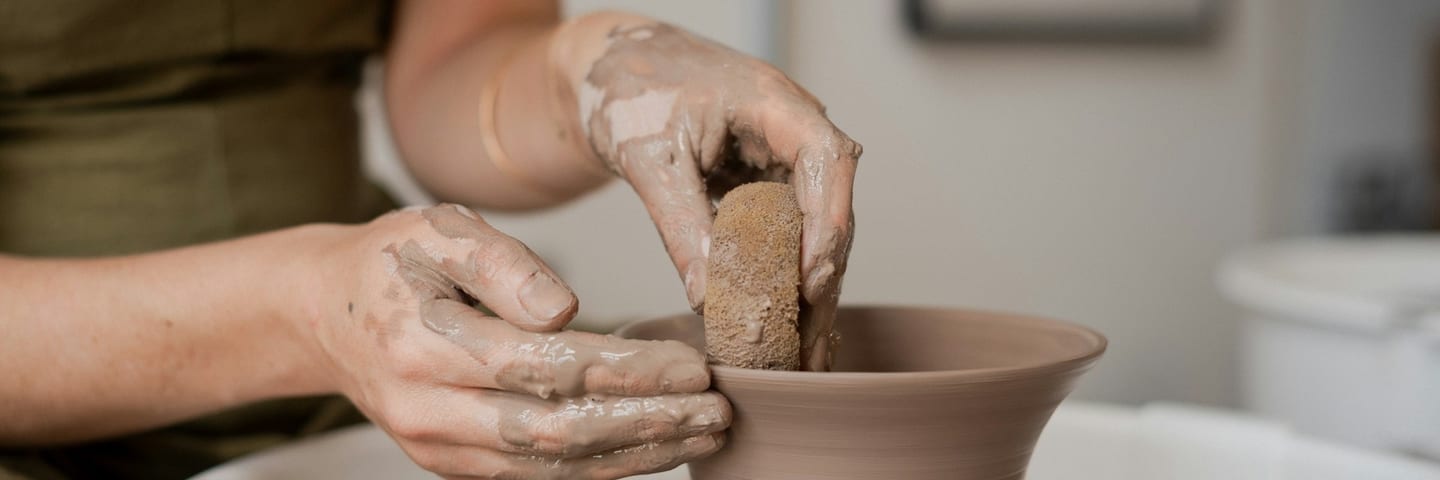
Centring is the part of throwing that takes the longest to learn and the longest to forget. You can know intellectually what centring requires — equal pressure from both hands, the clay moving inward and downward, the wheel speed matched to the resistance — and still spend years before it becomes automatic.
"The clay has a memory. It remembers how it was worked, how quickly it dried, what temperature it reached."
— Mara Jensen, studio notes
What I've noticed over the years is that centring is less about force and more about listening. The clay tells you when it's centred — there's a stillness, a lack of vibration in the hands. You stop pushing and the clay stays. That moment is the beginning of the piece.
I throw on a Shimpo RK-Whisper. It's a quiet wheel — the motor barely audible — which matters more than I expected. When the wheel is loud, you lose one of the feedback channels. The sound of the clay against your hands, the slight squeak of a wall that's getting too thin — these are signals. A quiet wheel lets you hear them.
Most forms are thrown in a single session. Larger vessels — anything over 30cm — are built in two stages, with a drying period between. The base is thrown first and left to firm up overnight. The next morning I add the upper section, joining the two with slip and compressing the seam from inside. Done well, the join disappears. Done badly, it cracks in the kiln.
All my glazes are mixed in the studio from raw materials. Silica, feldspar, whiting, iron oxide, cobalt, a handful of others. No commercial glazes. This is partly principle — I want to know exactly what's on every piece — and partly necessity. The wood kiln fires to cone 10 in reduction, and most commercial glazes aren't designed for that.
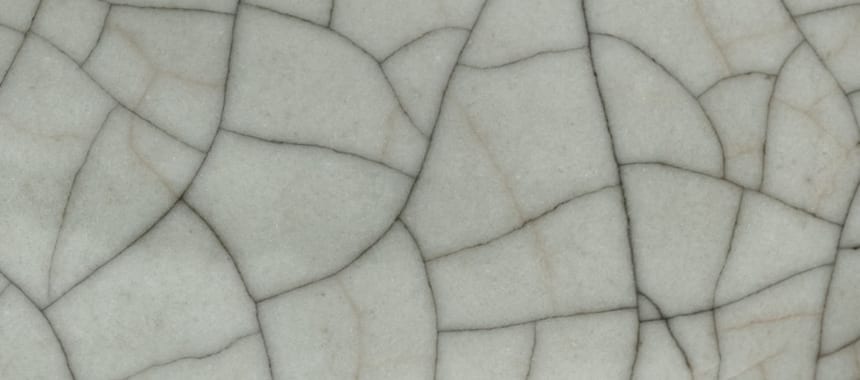
Glaze surface after wood firing — the ash deposits create effects no electric kiln can replicate.
Silica-feldspar
The structural foundation. Adjusted for cone 10 reduction firing.
2–8% by weight
Produces warm browns and tenmoku blacks depending on concentration.
Under 1%
Used sparingly. Even trace amounts produce strong blue in reduction.
Dip and pour
Interior poured first, exterior dipped. Thickness is everything.
The wood kiln is the part of the process I control least and think about most. I built it over two summers — a single-chamber anagama, about 2.5 cubic metres of internal volume — and I've fired it twice a year since. Each firing is different. The same glaze, the same clay, the same loading pattern will produce different results depending on the wood, the weather, and what the kiln decides to do with the atmosphere inside.
Firing takes 72 hours. The first 24 are slow — driving out residual moisture, bringing the kiln up gently to avoid thermal shock. The middle 24 are the climb: stoking every 10–15 minutes, watching the pyrometer, reading the colour of the flame through the spy holes. The final 24 are the push to temperature and the long hold at cone 10.
"Ash from the firebox lands on surfaces and melts into natural glaze. Each piece carries the record of its own firing."
— Mara Jensen, studio notes
When the kiln cools — three days, minimum — and I open the door, I'm always surprised. Not always pleasantly. Some pieces come out better than I imagined. Some don't survive. The ones that do carry something the electric kiln can't give them: a directness, a sense of having been through something. That's what I'm making them for.
What happens when you feed a kiln through the night — and what the ash decides on its own.
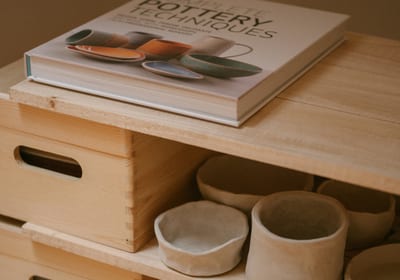
Cold clay, slow drying, and the particular quality of light through the north-facing window in June.
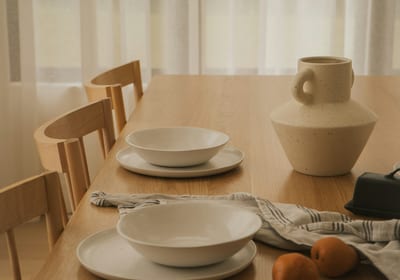
On the difference between a piece that gets used every day and one that stays on the shelf.